The week's small modular reactor news, in short summaries written by NuclearVox, each linked to its original source. Ontario and Canada first, then the companies in our SMR Directory and the wider industry. New editions stack on top; older ones stay below as the archive.
Edition 3 published November 18, 2026
Edition 3 — Week of November 23, 2026
Seven stories this week: Darlington's cost fight moves to the Ontario Energy Board, Canadian reactor technology gets a study contract in Türkiye, fuel deals land for two advanced reactor designs, and a Swedish lead-cooled reactor signs the first HALEU contract of its kind. This edition's permanent page →
The Ontario Energy Board has ordered the parties in OPG's Darlington rate case back into settlement talks, directing them to resume discussions on December 8 and report by December 11 on whether a settlement is reachable. The order follows OPG's November 10 disclosure, covered in Edition 2, that Unit 1 will miss its October 2030 target and its C$7.7 billion estimate; OPG's filing also pulled the project's forecast generation out of its 2027 to 2031 rate application entirely, while construction on the reactor and turbine buildings continues.
Why it matters: this is where the overrun stops being a press release and becomes a bill. What the settlement produces decides how much of Darlington's new cost lands in Ontario electricity rates, and it is the first hard test of the case for building Units 2 to 4 on the original numbers.
AtkinsRéalis subsidiary Candu Energy has signed a memorandum of agreement with Türkiye's state nuclear company TÜNAŞ to deliver a feasibility study and front-end engineering design for a possible multi-unit CANDU plant, with a six-unit, roughly 4.5 GW station under discussion and first power talked about for 2036. The agreement, signed at the COP31 summit in Antalya, covers study work only: no site is confirmed, no construction contract exists, and the study is expected to run to the end of 2027.
Why it matters: it is the most concrete export opening for Canadian reactor technology in years, and it puts the Darlington supply chain's home team in line for a second major programme if Türkiye chooses CANDU for its second or third plant.
Swedish developer Blykalla and enricher Urenco have signed an agreement under which uranium feed supplied by Blykalla will be enriched into HALEU at Urenco's Capenhurst plant in the UK to fuel Blykalla's first SEALER unit in the United States, with deliveries expected to begin in the early 2030s. The 55 MWe lead-cooled SEALER is designed to be factory built and road transportable, and Blykalla is planning a phased US demonstration called Fjäll, targeting a zero-power reactor in 2027 before a power-producing unit.
Why it matters: HALEU supply is the bottleneck under almost every advanced reactor schedule, and this is the first commercial enrichment contract written for a lead-cooled design. It is also a European enricher signing up to fuel a first unit being built in the US.
ARC Clean Technology has announced a memorandum of understanding with South Korea's POSCO International to explore an integrated fuel supply chain for the ARC-100, covering raw material supply, enrichment, deconversion and fuel fabrication for the reactor's HALEU-based uranium-zirconium metal fuel, with POSCO International in line as a potential fuel supplier to ARC projects. The MOU was signed on September 22, 2026 and announced November 17. ARC, a US DOE demonstration programme awardee tracked in the NuclearVox directory, is advancing its first US deployment at Idaho National Laboratory, with programmes also running in Canada and Türkiye.
Why it matters: ARC is attacking the same fuel problem as the Urenco deal from the other end, assembling the full chain before it has a plant to fuel. Whether these paper supply chains close is what decides if the ARC-100's schedule means anything.
Terra Innovatum reported on November 16 that it has delivered all 18 chapters of the draft preliminary safety analysis report for its SOLO micro-modular reactor to the US Nuclear Regulatory Commission for a readiness review, ahead of a planned construction permit application. The company, which ended September with US$82.4 million in cash, also signed a non-binding letter of intent covering up to 8 MWe of behind-the-meter SOLO capacity for data centre infrastructure in Argentina and Brazil, and still targets a first deployment in 2027, subject to regulatory approvals.
Why it matters: a complete draft safety report is the moment a microreactor concept becomes a licensing project. SOLO is a 1 MWe class design aiming to deploy years before the big SMRs, and its NRC reception will be an early read on how the agency handles very small reactors.
Elementl Power, one of the ten developers New York qualified in Edition 2's NYPA story and the developer behind Google's three advanced nuclear projects announced in 2025, said on November 17 that Google Cloud will help it build AI tools for the preconstruction stage of nuclear projects. The first tool, Atlas, screens potential sites across reactor designs, and Elementl says early analysis that took months can now be done in days or weeks, though that saving covers early screening only, not licensing or construction.
Why it matters: preconstruction is where nuclear schedules quietly die, in siting, technology selection and regulatory preparation. A developer with Google's backing industrialising that stage is worth watching, with the caveat that faster screening is not faster building.
Bangladesh's Rooppur Unit 1 supplied electricity to the national grid for the first time on November 17, delivering about 350 MW in a trial run and making Bangladesh the 33rd country to generate nuclear electricity. The Russian-built VVER-1200 is the first of two 1,200 MW units; a roughly ten-month trial period runs before commercial operation at full capacity, and the project deadline now sits at June 2028.
Why it matters: a framing note for readers rather than an SMR story. Rooppur is a large reactor, not an SMR, and its path from first criticality in October to first power in November is the commissioning rhythm every SMR project on this site still has ahead of it.
Six stories this week: Ontario's flagship build slips on cost and schedule while its supply chain expands in Cambridge, the US issues a landmark construction permit for an SMR-powered industrial site in Texas, Oklo secures its fuel, New York lines up its nuclear developers, and a Wisconsin co-op looks at SMRs for a former nuclear site. This edition's permanent page →
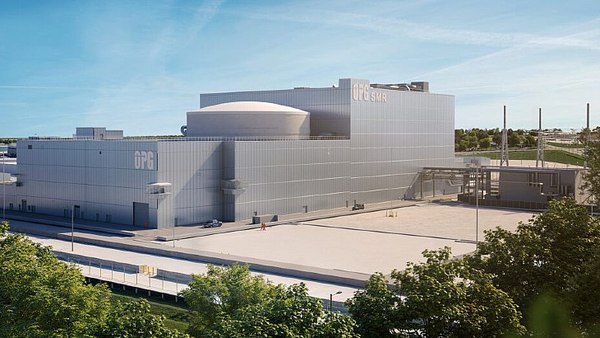
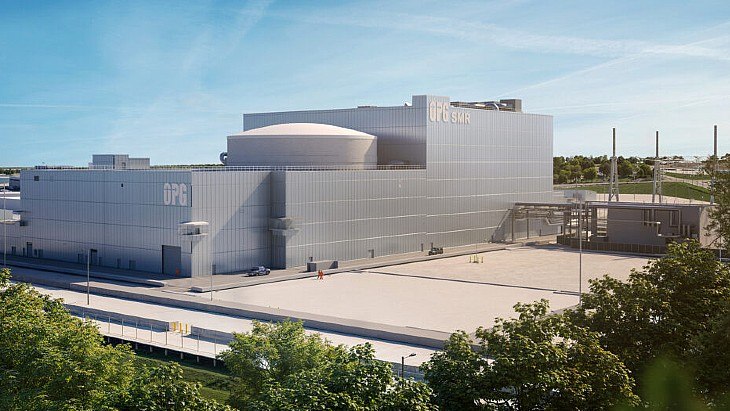
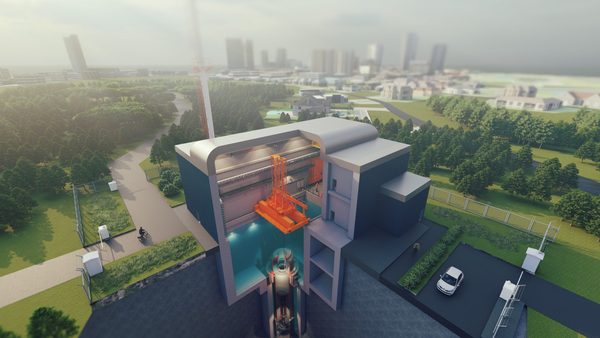
OPG says the first BWRX-300 at Darlington is no longer expected to start commercial operation by October 2030 or to be built within its $7.7 billion estimate, which includes systems shared by all four planned units. The company blames the knock-on effects of GE Vernova Hitachi's ongoing first-of-a-kind engineering on construction and supply chain work, and says a full cost and schedule reassessment should be substantially complete by mid-2027, with no new date or cost given yet.
An illustration of how the completed BWRX-300 at Darlington could look. Image: Ontario Power Generation (OPG)
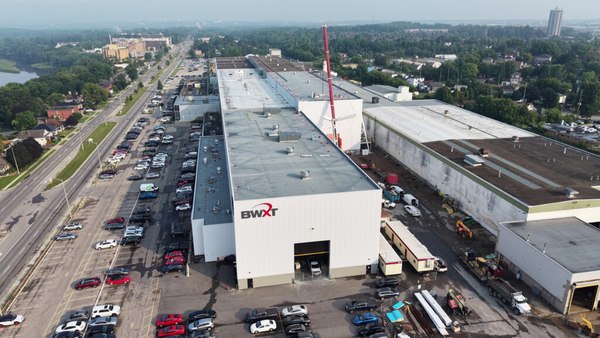
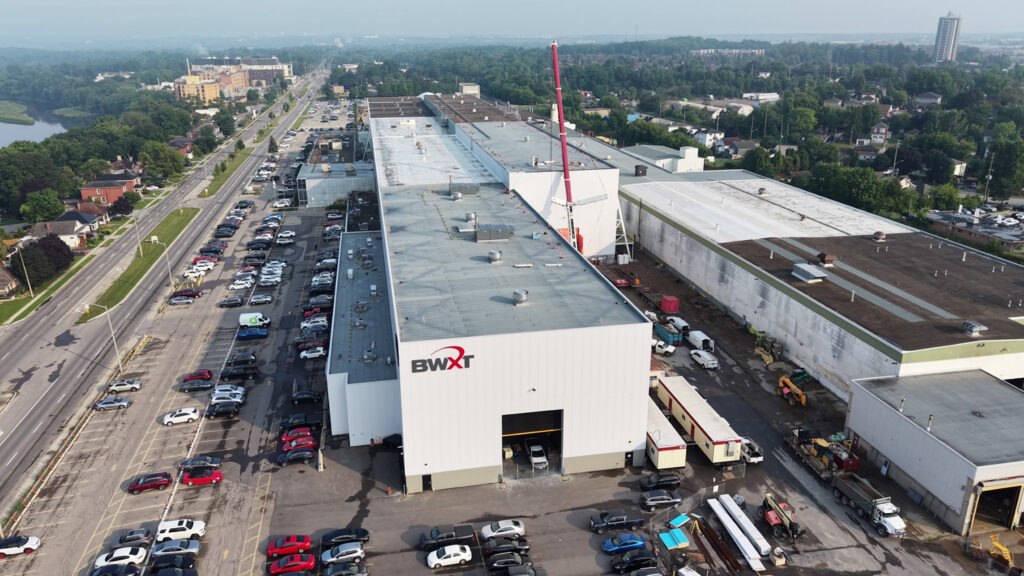
BWX Technologies has completed the roughly C$80 million expansion of its Cambridge, Ontario plant, adding 55,000 square feet and enlarging its commercial nuclear clean room by 40%. The plant is fabricating the reactor pressure vessel for the Darlington SMR alongside 48 steam generators for Pickering's refurbishment, and the expansion has created 200 long-term jobs, with 200 more hires targeted over the next year.
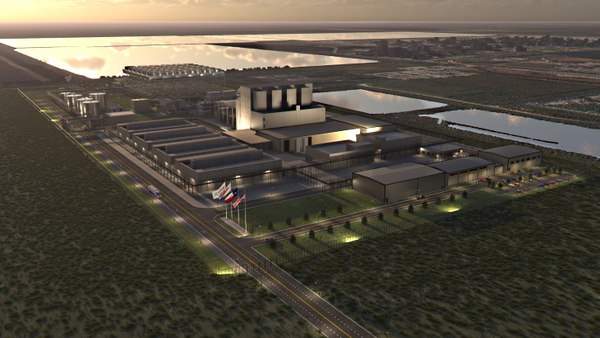
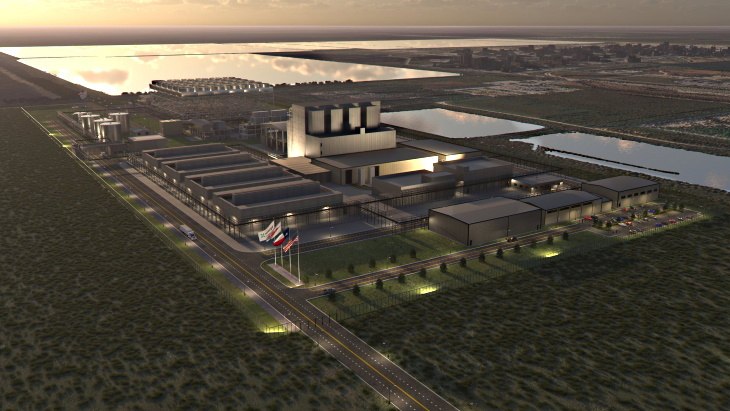
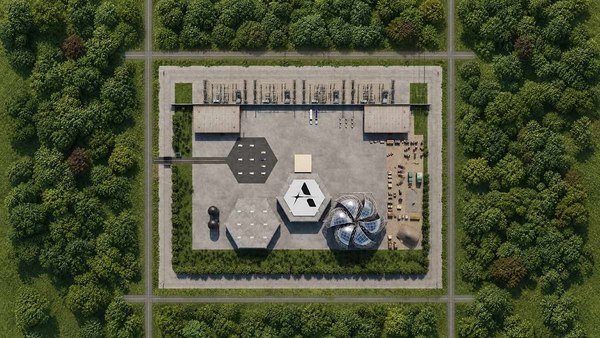
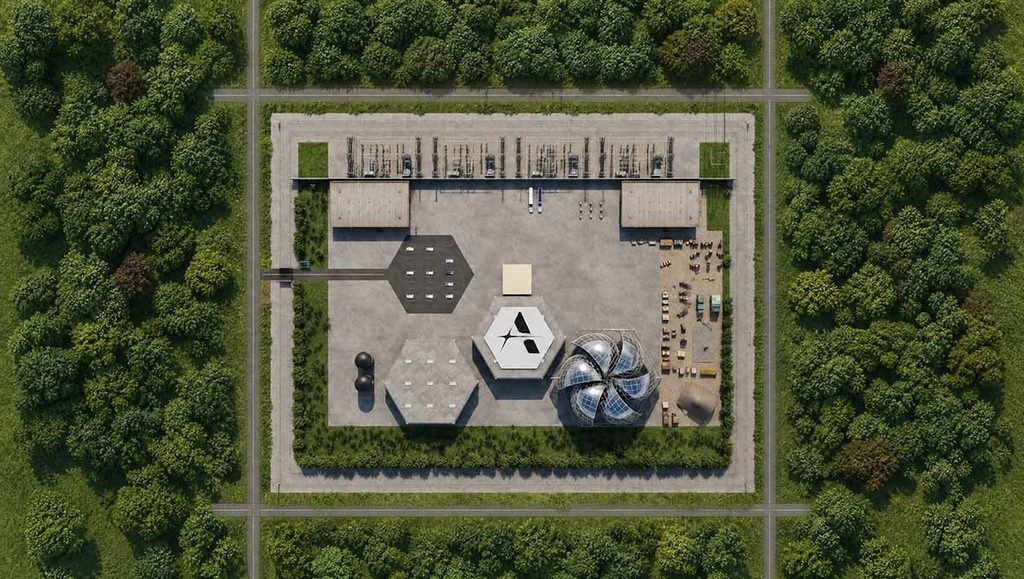
The US Nuclear Regulatory Commission has issued the construction permit for Long Mott Generating Station, the four-unit Xe-100 plant proposed for Dow's Seadrift site in Texas — the first NRC construction permit for a high-temperature gas-cooled reactor in nearly 60 years, and the first for a nuclear plant at an industrial site. The permit lets the project be built but not operated, and Dow still has to make its own investment decisions, with a preliminary decision expected in 2027, before full-scale construction begins. This follows the final safety review covered in Edition 1.
A rendering of the Long Mott Generating Station. Image: X-energy
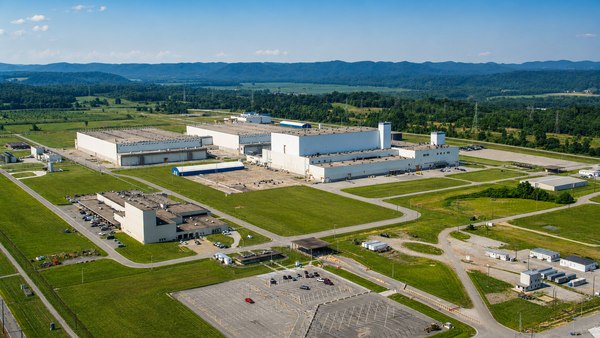
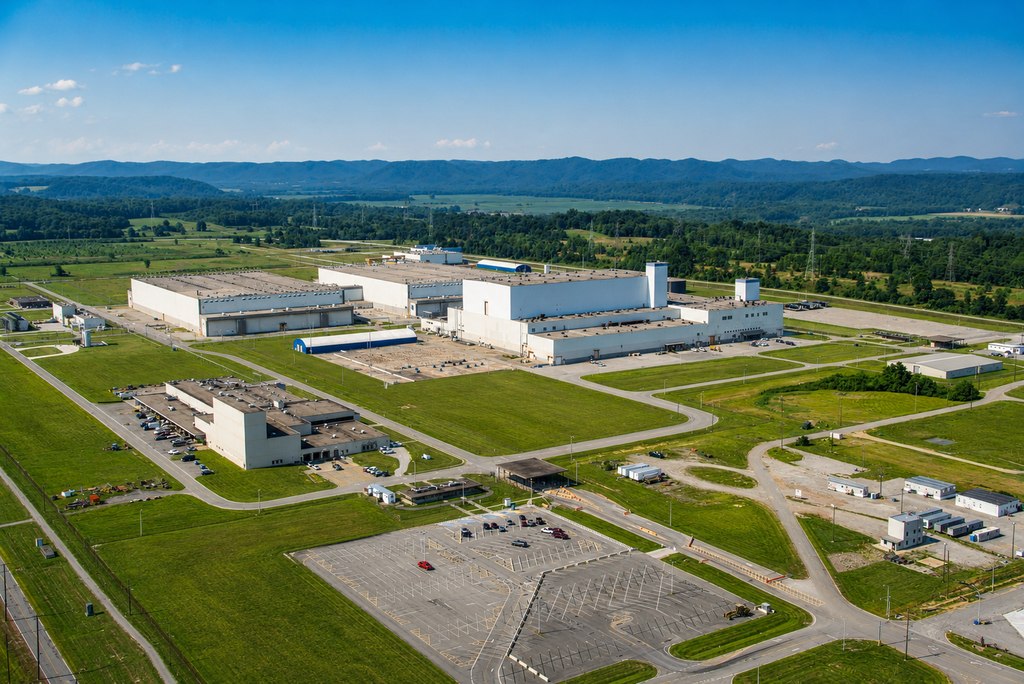
Oklo has turned its June letter of intent with Centrus Energy into definitive multi-year contracts for high-assay low-enriched uranium, enough to fuel up to five Aurora powerhouses for multiple years, with deliveries from Centrus' Piketon, Ohio plant scheduled to begin in 2029. Oklo's prepayments, backed by Meta's prepayment for future power, will help Centrus build new US enrichment capacity, and the fuel covers the first phase of Oklo's planned 1.2 GW Ohio campus.
Centrus' American Centrifuge Plant in Piketon, Ohio. Image: Centrus Energy
The New York Power Authority has qualified 10 developers for potential partnership on at least 1 GW of advanced nuclear capacity in upstate New York. Six firms qualified for both large reactors and SMRs, while four advanced on the SMR path only: Blue Energy, Holtec International, TerraPower and X-energy — three of them companies tracked in the NuclearVox directory. A host community, technology and development partner are still to be chosen.
Wisconsin's Dairyland Power Cooperative has signed a letter of intent with Applied Atomics to evaluate deploying that company's 100–150 MW SMRs at Dairyland's Genoa site, a former nuclear plant site that still holds a licensed spent fuel store, with a possible power purchase agreement to follow. A feasibility study comes first, and Dairyland says it expects to be able to decide on a binding PPA in roughly nine months, only if the numbers work for its members.
A rendering of Applied Atomics' SMR technology. Image: Applied Atomics Inc.
America's Electric Cooperatives (NRECA) · November 13, 2026 · Read the original →
Edition 1 — Week of November 9, 2026
Four stories this week: Ontario puts local factories to work on the Darlington build, a US regulator finishes its safety review of the Xe-100, NuScale starts cutting metal, and Europe puts construction money behind a heating reactor. This edition's permanent page →
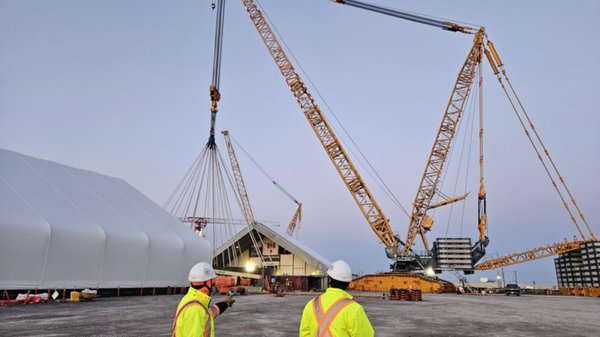
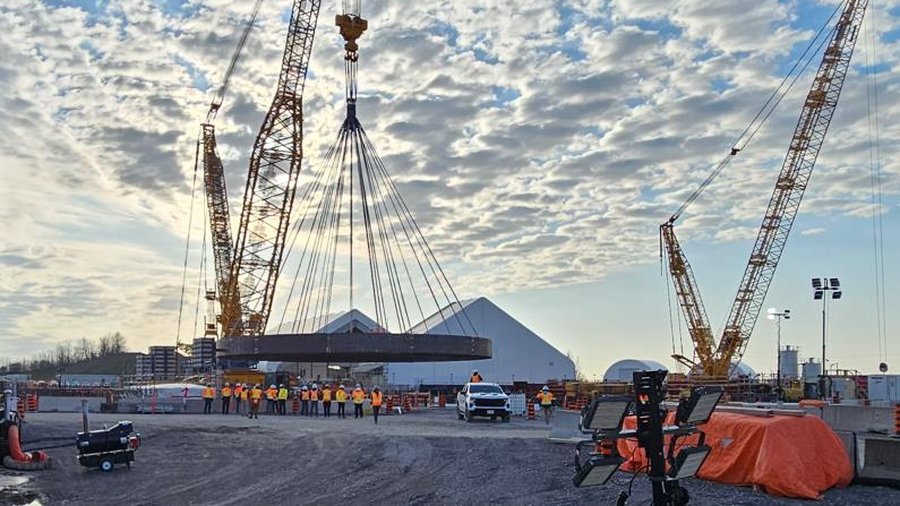
The Ontario government has awarded 14 contracts to manufacturers across the Greater Toronto and Hamilton Area to supply the Darlington New Nuclear Project, covering transformers, pumps, specialized steel and concrete for the first BWRX-300. The province says the work adds more than $110 million to Ontario's GDP, and that more than 100 Canadian companies now hold agreements with OPG on the project.
The basemat for Darlington's first BWRX-300 being hoisted into the reactor building shaft, April 2026. Image: Canadian Nuclear Safety Commission (CNSC)
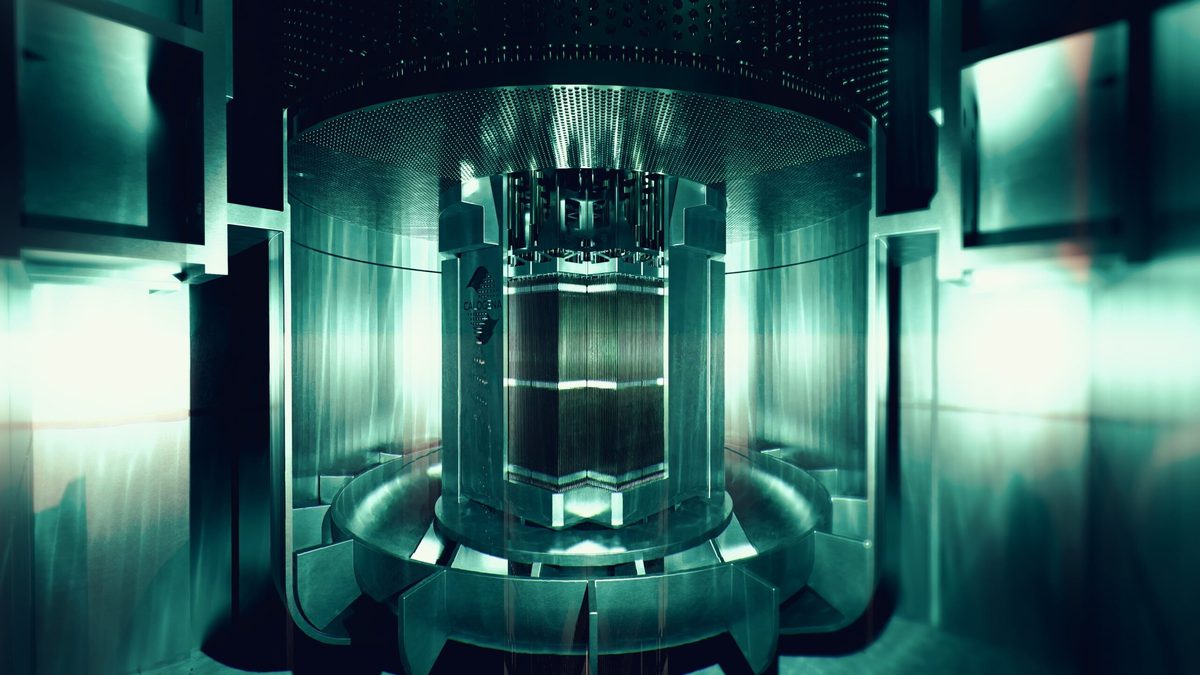
Calogena, a French developer building a 30 MW heat-only reactor for district heating, has been awarded €40 million from the European Commission's Innovation Fund toward its first commercial unit at Pierrelatte in southern France. The company says it is the first time EU funding for an SMR has gone directly toward building a commercial installation; the grant is support toward potential construction, not a construction decision, and Calogena targets deployment from 2030.
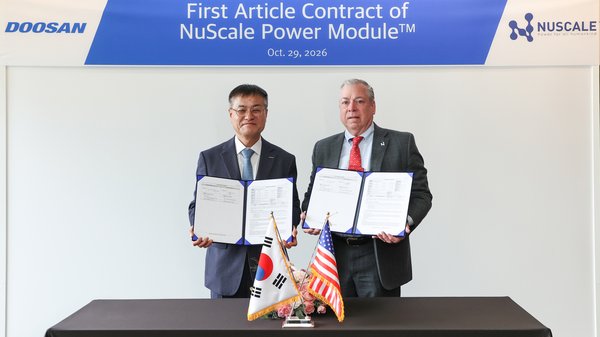
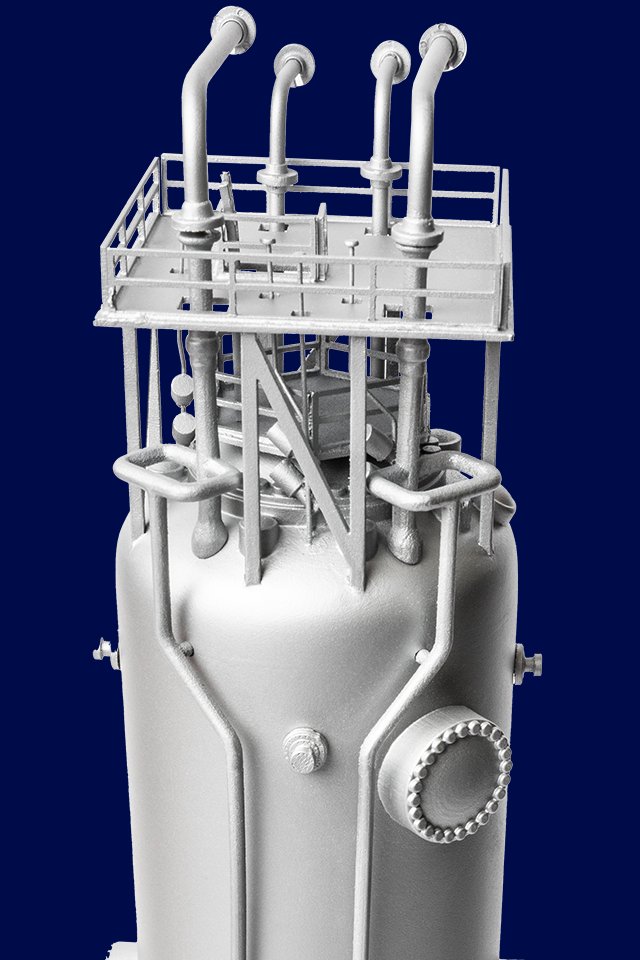
NuScale Power has signed a manufacturing contract with South Korea's Doosan Enerbility for first-article production of the upper reactor coolant system, the top section of the reactor pressure vessel in its Power Module. The work, at Doosan's Changwon plant, moves the partnership that began in 2019 from design and materials work into physical fabrication of commercial-grade components.
The US Nuclear Regulatory Commission has issued its Final Safety Evaluation Report for the Long Mott Generating Station, the four-unit Xe-100 plant Dow plans at its Seadrift site in Texas, to supply power and process steam. With the environmental review completed in May, both primary NRC reviews are done and the Advisory Committee on Reactor Safeguards supports issuing a construction permit; the permit itself is still to come.
Image: X-energy
EnergyNews · November 2, 2026 (safety report issued October 30, 2026) · Read the original →